
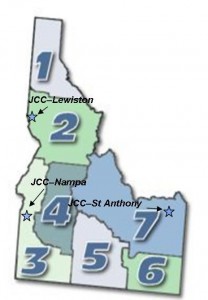
 Each state juvenile corrections center (facility) provides medical, educational, cognitive behavioral, residential rehabilitative services, and specialized programs for adjudicated sex offenders, female offenders, juveniles with mental health needs, juveniles with serious chemical dependency needs, and serious juvenile offenders. To the left is a Department district map that shows the locations of each correctional center.
The Juvenile Corrections Act is based on the Balanced Approach and Restorative Justice model. The foundations of the Balanced Approach are Community Safety, Offender Accountability, and Competency Development. Community justice requires that juvenile offenders work to restore the harm caused to their victims and communities to the greatest extent possible. In addition, the balanced approach involves communities in developing the solutions to address juvenile crime. Implementing the Juvenile Corrections Act is an ongoing process that involves not only members of the justice system, but all Idahoans as members of their communities.
For Juveniles Committed to the Department’s Custody
Community safety is addressed by providing secure confinement to offenders deemed a community risk, and by providing juveniles with the opportunity to learn skills to regulate their behavior when they return to the community.
Accountability is promoted through swift and appropriate consequences for actions, taking responsibility for criminal behavior, and providing victim restoration. Juveniles are taught how their crimes affect the community.
Competency development is addressed through education, training in appropriate decision making, social skills development, job skills, etc. These programs require juveniles to examine the thinking patterns associated with their criminal behavior and learn to change them.